What Is Islamic Banking? A Simple Beginner’s Guide
- salsabeelahk

- Apr 19
- 3 min read
Islamic banking is a financial system built on Shari'ah and ethical principles, fairness, and transparency. Unlike conventional banking, Islamic banking does not charge interest and avoids investments that are considered harmful. If you’re a beginner looking to understand Islamic banking in simple terms, this guide will walk you through the simple things about how it works, and why more people around the world are paying attention to it.
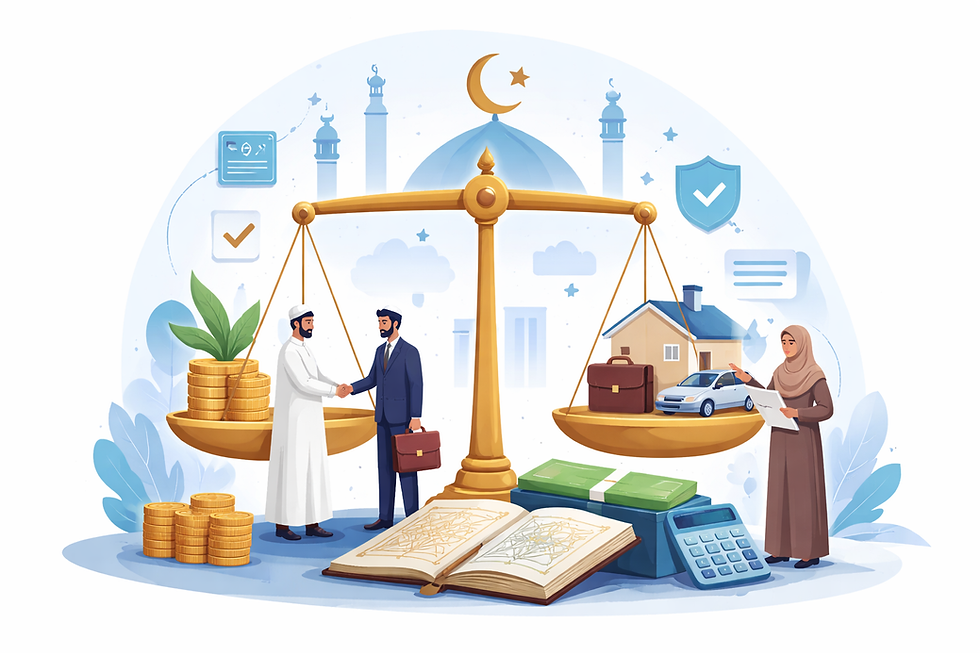
So, What Exactly Is Islamic Banking?
Islamic banking is a way of managing money that follows Islamic law (Shariah). You do not need deep religious knowledge to understand the basic ideas behind Islamic banking. At its core, Islamic banking focuses on:
● Fairness
● Shared responsibility
● Ethical financial practices
Instead of making money by charging interest, Islamic banks earn profits through trade, partnerships, and real economic activity.
Why Is Interest Not Allowed in Islamic Banking?
One of the biggest differences between Islamic banking and conventional banking is the prohibition on interest, also known as riba. In Islamic finance, earning money simply by lending money is seen as unfair. Why? Because one side benefits while the other carries all the risk.
So instead of interest-based loans, Islamic banks use models where:
● Risk is shared
● Profits are earned through real transactions
● Both parties benefit fairly
Islamic banking is often described as interest-free banking, but a more accurate way to describe it is risk-sharing finance.

How Does Islamic Banking Work?
Islamic banks don’t just give you money and ask for more in return. Instead, they use different methods, such as:
● Buying and selling assets - The bank buys something (like a house) and sells it to you at a profit agreed upfront.
● Profit-sharing - You and the bank invest together and share the profits (and losses).
● Partnerships - Both sides contribute money or effort to a business.
Every transaction must involve something real and tangible, not just money making money.
The Key Principles of Islamic Banking
Here are the core ideas behind Islamic banking, explained simply:
No interest (Riba) – Money should not grow on its own.
Shared risk – Profits and losses are shared.
Ethical investing – No gambling, alcohol, or harmful industries.
Real assets – Every deal is backed by something real.
Transparency – No hidden charges or unclear contracts.
Is Islamic Banking Only for Muslims?
Not at all.
Islamic banking is open to everyone, regardless of religion. Many non-Muslims choose Islamic banks because they value:
● Ethical finance
● Clear contracts
● Responsible investing
That’s why Islamic banking operates in both Muslim and non-Muslim countries worldwide.
Why Is Islamic Banking Becoming So Popular?
As people become more aware of ethical money management, Islamic banking offers an alternative that focuses on:
Financial fairness
Social responsibility
Long-term economic stability It is not only a religious framework, but also a values-based approach to finance.
Frequently Asked Questions (FAQs)
1. Is Islamic banking completely interest-free?
Yes. Islamic banking does not charge or pay interest. Instead, it earns profit through trade, partnerships, and asset-based financing.
2. Is Islamic banking safe?
Islamic banks are regulated just like conventional banks and follow strict financial and ethical guidelines. In addition, they often follow international standards set by organizations such as AAOIFI, which help ensure that their practices remain Shariah-compliant and transparent.
3. Can non-Muslims use Islamic banking?
Absolutely. Islamic banking is open to everyone, regardless of religion, and it also appeals to some non-Muslim customers who value ethical, asset-backed, and transparent financial practices.
4. How do Islamic banks make money?
They make money through profit-sharing, buying and selling assets, and business partnerships, not through interest.
5. Is Islamic banking better than conventional banking?
It depends on personal values. Islamic banking appeals to people who prefer ethical, transparent, and risk-sharing financial systems.
Final Thoughts
Islamic banking is more than just interest-free finance. It is a system built on fairness, transparency, and shared responsibility. For beginners, understanding these principles is a meaningful first step into the world of Islamic finance.
References
AAOIFI. Accounting and Auditing Organization for Islamic Financial Institutions.
World Bank. Global Islamic Finance Development Center.
Al Rayan Bank. Ethical Banking for Everyone.


Comments